

Table of Contents
- What a Face Cupping Set Actually Does for Your Skin
- Facial Cupping Benefits You Can Expect
- How to Use a Face Cupping Set: Step-by-Step
- The Best Oil for Facial Cupping (and Why It Matters)
- Facial Cupping Frequency: How Often Is Too Often?
- Mistakes That Cause Bruising (and How to Avoid Them)
- Matching Your Cupping Routine to Your Skin Type
- Conclusion
- Frequently Asked Questions
Last Updated: September 21, 2026
What a Face Cupping Set Actually Does for Your Skin
A face cupping set is a collection of small suction tools, usually made from medical-grade silicone, that you press and release against the skin to lift and stretch facial tissue. The cup creates a gentle vacuum, and that vacuum does the work your hands cannot. Unlike gua sha, which pushes fluid along the face, a face cupping set pulls tissue upward and outward.
That difference matters more than most guides admit.
Suction, Circulation, and Lymphatic Drainage
Suction therapy works on two systems at once, and the mechanism is worth understanding before you buy anything.
Micro-circulation. The vacuum draws blood toward the surface of the skin. Capillaries in the dermis dilate in response to the negative pressure, which increases local blood flow and brings oxygen and nutrients to the tissue. This is the same basic response you get from any controlled mechanical stimulus to the skin, the difference is that suction concentrates it in a small, targeted area.
Lymphatic drainage. The face has no pump. Lymph moves through a network of superficial vessels just under the skin, and it relies on muscle movement, gravity, and manual pressure to circulate.
What the Research Says vs. What Users Report
Here is the honest split, and it is the part most product pages skip.
Facial Cupping Benefits You Can Expect
The benefits of facial cupping fall into two buckets: results you see within minutes and results that build over weeks of consistent practice. The first bucket is what sells the tool. The second is what keeps people using it.
De-Puffing and Jawline Definition
Morning puffiness is fluid, not fat. Cupping moves that fluid, which is why de-puffing is the fastest and most reliable benefit. Most people see a visible difference within a single session.
Fine Lines, Radiance, and Skin Elasticity
Radiance comes from blood flow. When micro-circulation improves, skin looks warmer and more even almost immediately. Fine lines soften for a similar reason: hydrated, well-circulated tissue sits smoother than dehydrated tissue.
How to Use a Face Cupping Set: Step-by-Step
Total Time: 5-8 minutes Difficulty: Beginner
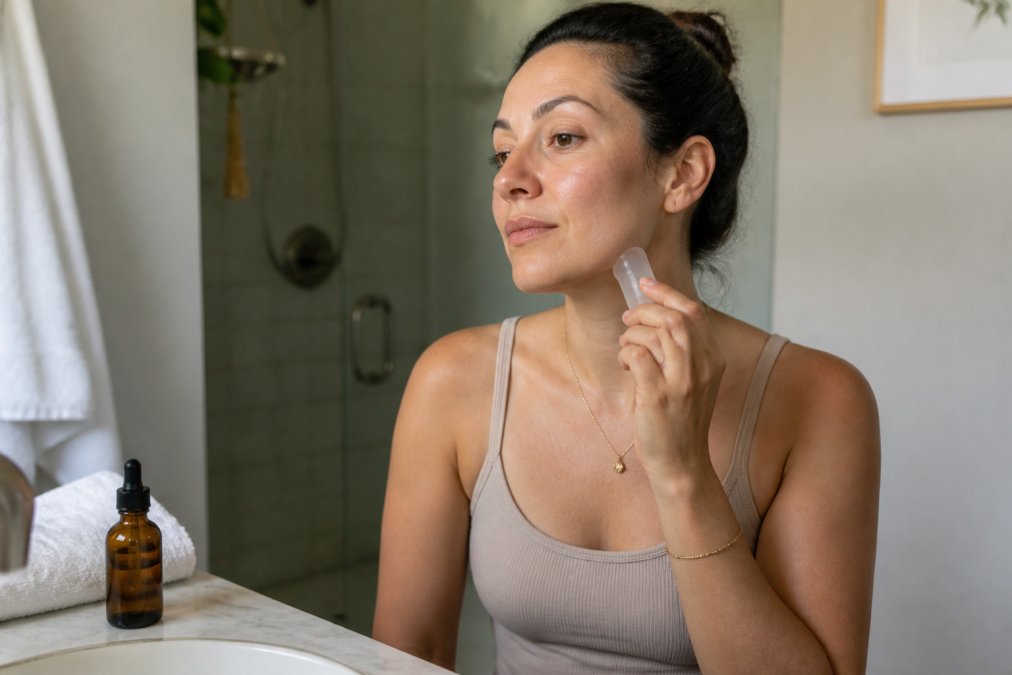
What You'll Need
- A face cupping set with small and medium cups
- A facial oil or slip serum
- A clean towel
- A mirror
Step 1: Cleanse and Oil [Time: 1 minute]
Start with clean, dry skin. Apply a generous layer of facial oil. Dry skin creates drag, and drag causes bruising.
Step 2: Press and Release [Time: 1 minute]
Squeeze the cup, place it on the skin, and release. You want light suction, not a hard seal. If the cup feels like it is biting, you have squeezed too hard.
Step 3: Glide in One Direction [Time: 3-4 minutes]
Move the cup upward and outward along the face. Never drag backward and never park the cup in one spot. Short, sweeping strokes only.
Step 4: Finish and Clean [Time: 1 minute]
Wash the cups with warm water and mild soap, then air dry. Apply your usual moisturizer.
Target Areas: Eyes, Lips, Jaw, and Neck
Use the smallest cup around the eyes and lips, where the skin is thinnest. The eye area gets feather-light pressure and outward strokes only. The jaw and neck tolerate medium cups and longer strokes, and this is where most of the drainage work happens. Work the neck before the jaw, so fluid has somewhere to go.
The Best Oil for Facial Cupping (and Why It Matters)
The best oil for facial cupping is one with enough slip to let the cup glide without tugging, and no active ingredients that irritate freshly stimulated skin. Jojoba, squalane, and simple plant-based blends all work well. Avoid anything with strong exfoliating acids or retinol on cupping days.
Facial Cupping Frequency: How Often Is Too Often?
Facial cupping frequency depends on three variables, not one: your goal, your pressure, and how your skin recovers. Most guides give a single number and skip the rest. That is how people end up with marks they did not want.
Frequency by Goal
- De-puffing (morning routine): Daily is fine. A light, 2-3 minute session with minimal suction is a gentle wake-up for the face and carries very little risk.
- Sculpting and drainage work: Three to four sessions per week is plenty. This is where you use slightly firmer suction and longer strokes along the jaw and neck.
- Anti-aging / collagen-focused routine: Three sessions per week, sustained over months, is the pattern most practitioners recommend. Consistency matters more than intensity here.
Frequency by Skin Reactivity
This is the part that gets skipped, and it is the part that determines whether you bruise.
- Resilient skin (no visible capillaries, rarely flushes): You can tolerate daily light sessions and 3-4 firmer sessions per week.
- Sensitive or reactive skin: Start with twice a week. Build up only after two weeks with no redness lasting more than 20 minutes.
- Skin with visible capillaries or a history of easy bruising: Once or twice a week, light pressure only, and never on the same area two days in a row.
- Mature or thin skin: Twice a week with heavier oil and light suction. Thin skin bruises faster and recovers slower.
The Rule Most People Break: Duration, Not Frequency
A five-minute session done consistently beats a twenty-minute session that leaves marks. The reason is simple: bruising is a function of how long suction stays in one area, not how many days per week you cup.
Recovery Time Between Sessions
Give your skin at least 12 hours between sessions, and 24 hours if you used firmer suction. If you see any pink or red marks that last more than an hour after a session, you used too much pressure, wait a full day before cupping again, and dial the suction back on the next session.
A Simple Weekly Template
If you want a starting point rather than a rulebook:
- Monday, Wednesday, Friday: 5-minute sculpting session (jaw, neck, cheekbones).
- Tuesday, Thursday: 2-minute light de-puffing session (under-eyes, forehead).
- Weekend: Rest, or one light session if you feel puffy.
Mistakes That Cause Bruising (and How to Avoid Them)
Bruising almost always comes from one of four mistakes. Fix these and cupping becomes a low-risk practice.
| Mistake | Why It Causes Bruising | The Fix |
|---|---|---|
| Too much suction | Breaks capillaries under thin skin | Light seal, not a hard squeeze |
| Dry skin | Creates friction and drag | Generous oil before every stroke |
| Staying in one spot | Pools blood in a single area | Keep the cup moving |
| Dragging downward | Works against lymph flow | Always stroke upward and outward |
Matching Your Cupping Routine to Your Skin Type
Skin type changes the protocol more than most guides acknowledge. This is one of the gaps in the standard advice.
- Dry or mature skin: Use heavier oil and lighter suction. Focus on hydration first, drainage second.
- Oily or congested skin: Keep sessions short and clean cups thoroughly between uses.
- Sensitive or reactive skin: Start with the smallest cup and the lightest pressure. Patch test on the jaw before working the full face.
- Combination skin: Use different cup sizes per zone rather than one pressure for everything.
Conclusion
The hardest part of any facial tool is not learning the technique. It is building a routine you actually keep, which is where most skincare purchases quietly fail.
Frequently Asked Questions
Is cupping good for your face?
Facial cupping uses gentle vacuum suction to stimulate micro-circulation, support lymphatic drainage, and ease facial tension. Many users report reduced puffiness and a more sculpted look after consistent use. It is non-invasive and generally well tolerated when suction stays light and the skin is properly lubricated. Results build over weeks, not overnight, so treat it as a routine rather than a one-time fix.
Do facial cupping tools actually work?
The strongest evidence supports improved blood flow and temporary de-puffing from lymphatic movement. Claims about collagen production and long-term anti-aging are mostly anecdotal, though regular facial massage does support skin elasticity over time. A face cupping set works best as part of a consistent routine alongside hydration and sun protection. Expect gradual improvements in radiance and contour rather than dramatic structural change.
How often should you use a face cupping set?
Beginners should start two to three times per week for five to ten minutes per session. Once your skin adjusts, you can move to daily use if it feels comfortable. Always leave at least a few hours between sessions, and skip cupping on irritated or sunburned skin. If you notice redness that lasts more than an hour, reduce frequency or lighten your suction intensity.
Can facial cupping cause bruising?
Bruising happens when suction is too strong or the tool is dragged without enough slip. Facial cups should never leave the deep purple marks associated with body cupping. Use a generous layer of facial oil, keep suction light, and glide rather than pull. If a bruise appears, pause cupping on that area until it fades completely, usually three to seven days.


