

Table of Contents
- What Are Peptides and How Do They Work in Skincare?
- Benefits of Peptides for Skin
- Types of Peptides: Signal, Carrier, and Enzyme-Inhibitor
- Peptide vs Retinol for Anti-Aging: What's the Difference?
- How to Use Peptides in Your Skincare Routine
- Peptide Hype vs. Science: What the Research Actually Shows
- Building a Peptide Routine That Fits Your Life
- Frequently Asked Questions
Last Updated: September 23, 2026
What Are Peptides and How Do They Work in Skincare?
Peptides in skincare are short chains of amino acids that signal your skin cells to perform specific functions. When applied topically, these molecular messengers communicate with your dermal matrix to trigger collagen synthesis, elastin production, and cellular repair. Think of them as instructions your skin can actually read and follow.
Understanding amino acid chains and cellular signaling
A peptide is essentially a smaller version of a protein, made up of amino acids linked together. Your skin recognizes these chains and interprets them as signals to boost production of structural proteins that keep skin firm and plump. Signal peptides are the most common type in skincare formulations because they directly instruct fibroblasts (the cells that produce collagen and elastin) to get to work.
The cellular signaling process works through a lock-and-key mechanism. When a peptide contacts a skin cell receptor, it activates a cascade of biochemical events. This activation tells the cell: "produce more collagen," "increase elastin," or "reduce inflammation." The specificity matters. Different peptides trigger different responses, which is why peptide selection shapes your results.
Carrier peptides function differently. Rather than sending signals, they transport beneficial minerals like copper or magnesium deeper into the skin where they're needed most. Enzyme-inhibitor peptides work by slowing down the breakdown of existing collagen and elastin, essentially telling your skin to preserve what it already has.
How peptides penetrate the skin barrier
The skin barrier is selective by design, blocking most large molecules from entering. Peptides have a molecular weight advantage here. Smaller peptides (typically under 1,000 Daltons) can penetrate the stratum corneum more effectively than larger proteins. This doesn't mean all peptides reach the dermis where collagen lives, but the right formulation helps them get deeper than many other actives.
Bioavailability is the real challenge. A peptide's ability to survive the journey through your skin and remain active once it arrives determines whether it actually works. Stabilized peptides in well-formulated serums outperform unstable ones in cheaper products. Sacred Space Self-Care offers plant-based serums with organic, hypoallergenic ingredients.
Penetration depth varies by peptide type and formulation. Leave-on treatments allow peptides more time to work their way through the skin barrier than rinse-off products. This is why serums and moisturizers containing peptides typically outperform cleansers with the same actives.
Benefits of Peptides for Skin
Peptides deliver measurable improvements across multiple skin concerns, though results require consistency. The benefits compound over time as your skin responds to repeated signaling.
Collagen and elastin production
Collagen synthesis is the primary benefit peptides deliver. When signal peptides reach fibroblasts, they trigger the production of new collagen fibers. This is not a temporary plumping effect, it's actual structural protein being built within your skin. Elastin production follows the same pathway, restoring the springiness that fades with age.
The timeline matters. New collagen doesn't appear overnight. Most people see measurable improvements in skin firmness and texture after 6-8 weeks of consistent use, with more dramatic results visible at the 12-week mark. This delayed gratification is why many people abandon peptide products too early, mistaking a slow-acting active for an ineffective one.
Firming, fine lines, and skin elasticity
Fine lines soften as collagen density increases. The skin becomes more resilient, bouncing back from facial expressions rather than creasing permanently. This is especially noticeable around the eyes and mouth where repeated movement creates expression lines.
Skin elasticity improves because elastin fibers become more abundant and organized. Your skin literally becomes more flexible. This elasticity also supports better hydration retention, a firmer skin barrier holds moisture more effectively.
The anti-aging properties of peptides extend beyond surface-level plumping. You're building actual structural support rather than relying on humectants or occlusive ingredients to temporarily hydrate the skin. This is why peptide routines tend to produce lasting improvements rather than temporary cosmetic effects.
Types of Peptides: Signal, Carrier, and Enzyme-Inhibitor
Understanding peptide categories helps you choose products aligned with your specific skin goals. Each type operates through a different mechanism.
Signal peptides are the workhorses of anti-aging skincare. They communicate directly with your skin cells, triggering collagen synthesis and elastin production. Matrixyl and Argireline are common signal peptides found in commercial formulations. They're the most researched peptide type in skincare, with the most visible firming and line-softening effects.
Carrier peptides transport essential minerals and nutrients into deeper skin layers. Copper peptides are the most well-known example, supporting collagen cross-linking and wound healing. These work best in combination with signal peptides, they support the infrastructure while signal peptides build new structure.
Enzyme-inhibitor peptides slow collagen breakdown by inhibiting metalloproteinases, the enzymes that degrade collagen over time. They're preventative rather than corrective. Using enzyme-inhibitor peptides early helps preserve existing collagen before significant loss occurs. This is why younger skin benefits from peptide preventative routines, not just corrective ones.
Most effective peptide serums contain multiple peptide types working synergistically. A formula with signal peptides handling new collagen production, carrier peptides delivering minerals, and enzyme-inhibitors protecting existing structure addresses skin aging from multiple angles.
Peptide vs Retinol for Anti-Aging: What's the Difference?
Both peptides and retinol stimulate collagen production, but they work through entirely different pathways. The choice depends on your skin type, tolerance, and timeline expectations.
Retinol is more aggressive. It increases cell turnover dramatically, which is why it causes irritation, redness, and peeling in the first weeks of use. The payoff is faster visible results, most people see skin texture improvements within 2-4 weeks. Retinol also addresses pigmentation and acne alongside anti-aging concerns.
Peptides are gentler. They don't cause irritation because they're not disrupting your skin's natural processes, they're enhancing them. The tradeoff is a slower timeline. Results take 6-8 weeks to become apparent, and maximum benefits emerge over months of consistent use. For sensitive skin, reactive skin, or anyone with a history of irritation, peptides are the more sustainable choice.
The compatibility question matters too. Retinol requires careful layering and sun protection because it increases photosensitivity. Peptides layer easily with most actives, including vitamin C, niacinamide, and hyaluronic acid. You can use peptides morning and night without adjustment periods.
Consider combining them strategically. Many practitioners recommend using retinol 2-3 times weekly for maximum collagen stimulation, then using peptide serums on alternate nights or mornings. This approach captures retinol's potency while maintaining skin barrier health through peptide support.
How to Use Peptides in Your Skincare Routine
Peptides work best as part of a consistent ritual. They're not a one-time treatment, they require ongoing use to maintain the signaling that drives collagen production.
Layering peptides with other active ingredients
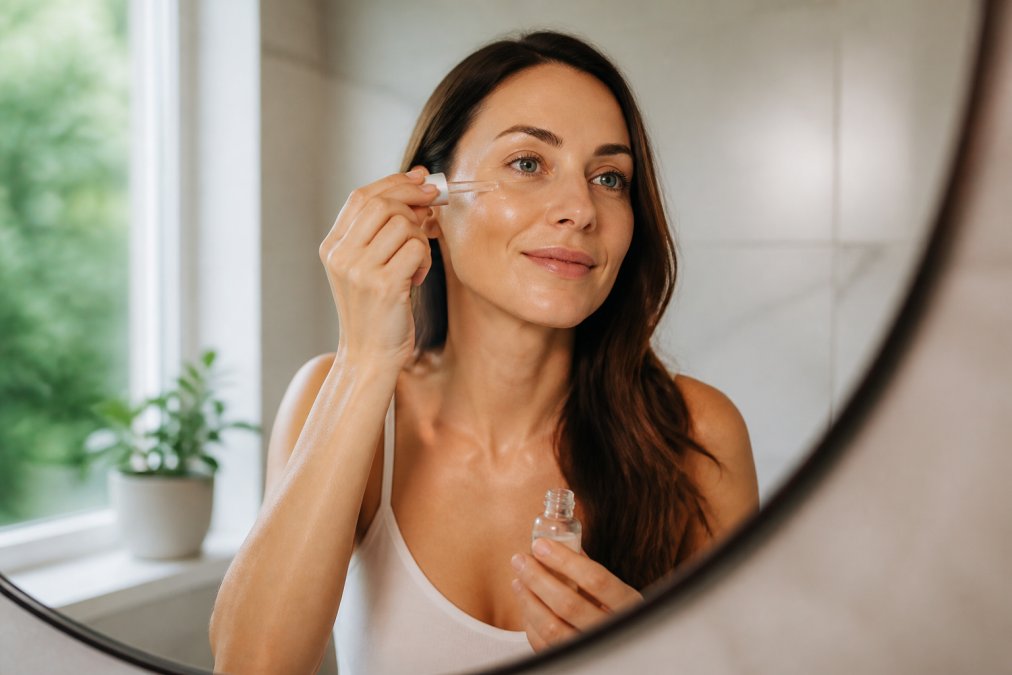
Apply peptides to clean, slightly damp skin. Damp skin helps peptides penetrate more effectively than completely dry skin. Use a peptide serum as your first active treatment, before heavier serums or moisturizers. The order matters: apply thinnest, lightest products first, then layer richer textures on top.
Peptides layer well with most actives. Vitamin C serums can go before or after peptides, both work through different mechanisms so they don't interfere. Niacinamide is an excellent companion to peptides; it supports skin barrier function while peptides work on collagen production. Hyaluronic acid hydrates without competing for the same cellular pathways.
Avoid layering peptides with strong exfoliants on the same evening. If you're using chemical exfoliants like AHAs or BHAs, use peptides on non-exfoliation nights. Your skin barrier needs stability for peptides to signal effectively. Compromised barriers become less responsive to peptide signaling.
Retinol and peptides can coexist in the same routine, but not simultaneously. Use retinol 2-3 times weekly, and peptide serums on the remaining nights. This prevents over-stimulation while maintaining consistent collagen-building signaling throughout the week.
Timeline: How long results take
Expect the first 4 weeks to feel uneventful. Your skin is receiving signals and beginning collagen synthesis, but visible changes haven't accumulated yet. This is where most people quit, confusing a slow-acting ingredient for an ineffective one.
By week 6-8, fine lines begin softening. Skin texture becomes noticeably smoother. The effect is subtle but real, you'll notice it most when comparing photos from the start of your routine.
At 12 weeks, firmness improvements become obvious. Skin feels more resilient. Expression lines are visibly softer. This is when you know the peptide signaling is actually working.
Consistency matters more than any other factor.
Peptide Hype vs. Science: What the Research Actually Shows
The skincare industry markets peptides as miracle workers, but the actual science is more nuanced. Some peptides deliver measurable results. Others are included in formulations purely for marketing appeal.
Building a Peptide Routine That Fits Your Life
The best skincare routine is one you'll actually follow. Complexity kills consistency, and consistency is what drives peptide results.
Frequently Asked Questions
Do peptides in skincare actually work?
Peptides work by signaling skin cells to produce more collagen and elastin, which support skin firmness and elasticity. Research shows peptides can reduce fine lines and improve skin hydration, though results depend on peptide type, concentration, and consistent use. Signal peptides and carrier peptides have the strongest evidence for anti-aging benefits. Results typically appear after 4-8 weeks of regular application.
How long does it take to see results from peptide skincare?
Most people notice improvements in skin hydration and texture within 2-4 weeks. Visible reduction in fine lines and improved skin elasticity typically takes 6-8 weeks of consistent, daily use. The timeline depends on your starting skin condition, the peptide concentration in your product, and how well peptides penetrate your skin barrier. Patience and routine consistency matter more than the product itself.
Can you use peptides with vitamin C or retinol?
Yes, peptides layer well with both vitamin C and retinol, but timing matters. Apply peptide serums first on clean skin, then add vitamin C or retinol in a separate step. Peptides support collagen synthesis while vitamin C brightens and retinol accelerates cell turnover, creating a complementary routine. If you're new to retinol, start slowly and introduce peptides once your skin adjusts to avoid irritation.
What's the difference between peptides and retinol for anti-aging?
Retinol works by increasing cell turnover and collagen remodeling, while peptides signal cells to produce new collagen and elastin. Retinol is stronger and faster-acting but can cause irritation, sensitivity, and sun sensitivity. Peptides are gentler, work gradually, and suit sensitive skin better. Many people use both: peptides for daily nourishment and retinol 2-3 times weekly for accelerated results.


